
Thursday, June 13, 2019
My First Classroom

Wednesday, June 12, 2019
Peer Review
I believe that teacher peer-review is a multi-faceted system. There are positives and negatives. One of the advantages is that you are being reviewed by someone who has been in your shoes before, so they understand all of the struggles you are having with the new job. A disadvantage would be that they may not be completely qualified to review/judge your progress and efforts properly and administration might not fully accept everything they say for their review. This may cause it to be less effective because of the administration's trust in their word, and also if they aren't really trained on how to do it they won't necessarily notice everything they need to. I think I would love to have my first evaluation done this way so that my peer teacher would be more willing to help me fix the mistakes I made, and help prepare me for the real review done by the administration.
What makes a good teacher?
Recently I took a poll about what qualities a good teacher needs to have, and honestly every single item on the list I believe are incredibly important for a teacher to have. However, while the majority of people agreed with my answers, some people answered in ways I thought were very confusing. One of the items was "knowledge of the subject matter" which I thought for sure everyone would agree is incredibly important for a good teacher to have, and yet 1% of the people who voted said it was 'barely important'. Even though it is such a small percentage I would still like to understand what was going on in the minds of the people who put that knowing the subject they teach is not very important for a teacher. I believe that creativity, innovation, variety, organization, reflection, introspection, motivating, enjoying young people, and all of the other qualities all join together to make an amazing teacher.
Tuesday, June 11, 2019
Educational Websites
Early Childhood:
ABC Expedition
Looking at this site I don't believe it would be appropriate for my high school class, as it is mostly to teach children the different letters, and will not challenge them at all.
Elementary:
PlayTime Theater
This app could be more useful if students were doing a project where they can create their own video, but still would not necessarily challenge them to think and discuss without being prompted. There is also no author or email contact provided, and the institution supporting this app is unclear.
Middle School:
NASA
This site provides a large wealth of information that can be used in any kind of classroom, no matter the age or level. This website is helpful for students to learn on their own, and for sources as a teacher.
High School:
Marine Life Encyclopedia
This site would be perfect to introduce to a class of high school biology students. They would be able to use the information for projects, studying, and the teachers can use the articles as sources.
Digital Media:
ESchool News
This website is a good resource for educators to learn about new advancements in technology, but I don't necessarily see how it could be incorporated appropriately into a classroom. Still a very useful website.
ABC Expedition
Looking at this site I don't believe it would be appropriate for my high school class, as it is mostly to teach children the different letters, and will not challenge them at all.
Elementary:
PlayTime Theater
This app could be more useful if students were doing a project where they can create their own video, but still would not necessarily challenge them to think and discuss without being prompted. There is also no author or email contact provided, and the institution supporting this app is unclear.
Middle School:
NASA
This site provides a large wealth of information that can be used in any kind of classroom, no matter the age or level. This website is helpful for students to learn on their own, and for sources as a teacher.
High School:
Marine Life Encyclopedia
This site would be perfect to introduce to a class of high school biology students. They would be able to use the information for projects, studying, and the teachers can use the articles as sources.
Digital Media:
ESchool News
This website is a good resource for educators to learn about new advancements in technology, but I don't necessarily see how it could be incorporated appropriately into a classroom. Still a very useful website.
Teaching with Google Classroom
50 Things you can do with the Google Classroom
This video is a wonderful way to educate teachers on how to use this wonderfully helpful and useful app. Alice Keeler shows teachers that using google classroom is not only easy but also has so many different ways that it can be incorporated into the classroom. She talks about how it is easy to incorporate other things into the website, and that it is not a replacement site, it is simply a place for students to be able to go and better understand what is going on in their classes. I think this is such a helpful video, and her blog posts and book is something that really helps teachers become better educated in using these new teaching tools.
This video is a wonderful way to educate teachers on how to use this wonderfully helpful and useful app. Alice Keeler shows teachers that using google classroom is not only easy but also has so many different ways that it can be incorporated into the classroom. She talks about how it is easy to incorporate other things into the website, and that it is not a replacement site, it is simply a place for students to be able to go and better understand what is going on in their classes. I think this is such a helpful video, and her blog posts and book is something that really helps teachers become better educated in using these new teaching tools.
A Letter to Me
Recently I wrote a letter to my future self using the website FutureMe about what I have learned throughout my education about teaching, and what it means to me. The letter I wrote is below:
Dear Future Daley,
By now you are probably off teaching somewhere and have forgotten that you sent this. I have learned so much at the Mount, and I am sure you have learned even more since I wrote this. So far what I have learned has been about how to be a good teacher, and how sometimes things that your teachers of the past used worked against contributing to your learning. One of the most important things I have learned is that teaching needs to be creative and imaginative. It's time to be done with boring textbooks and lectures. Students need to be excited and engaged in order to learn! Throwing information at them will not get them to learn. They need to be able to digest what they're learning, and it is your job to help them develop the critical thinking skills they need to be able to do that. This is where your strength lies. You have always been good at thinking of creative and even metaphorical ways of presenting information, and I am sure you will come up with many crazy ideas for your classes. You are also incredibly passionate about what you do, and I hope you never lose that, because that is what will drive you to be the best teacher you can be. Your weaknesses lie in getting overly involved in things that don't matter to you, so just be careful where this road leads you as a teacher. My advice is to continue loving what you do, even if that means you need to change what you are doing, and to always try your hardest for every single child in your class no matter what, because they need you and look up to you. You will make an amazing teacher.
From Daley (6/11/19)
I think this is a very beneficial experience because it allows us in the future to look back and not only see how far we have come, but also reminds us of where we were and what our expectations were. This can help our future selves remember where we wanted to be, and reflect on either how we got there, or whether we strayed from our path at all. I am excited to see what I think and where I am when I receive this letter.
Dear Future Daley,
By now you are probably off teaching somewhere and have forgotten that you sent this. I have learned so much at the Mount, and I am sure you have learned even more since I wrote this. So far what I have learned has been about how to be a good teacher, and how sometimes things that your teachers of the past used worked against contributing to your learning. One of the most important things I have learned is that teaching needs to be creative and imaginative. It's time to be done with boring textbooks and lectures. Students need to be excited and engaged in order to learn! Throwing information at them will not get them to learn. They need to be able to digest what they're learning, and it is your job to help them develop the critical thinking skills they need to be able to do that. This is where your strength lies. You have always been good at thinking of creative and even metaphorical ways of presenting information, and I am sure you will come up with many crazy ideas for your classes. You are also incredibly passionate about what you do, and I hope you never lose that, because that is what will drive you to be the best teacher you can be. Your weaknesses lie in getting overly involved in things that don't matter to you, so just be careful where this road leads you as a teacher. My advice is to continue loving what you do, even if that means you need to change what you are doing, and to always try your hardest for every single child in your class no matter what, because they need you and look up to you. You will make an amazing teacher.
From Daley (6/11/19)
I think this is a very beneficial experience because it allows us in the future to look back and not only see how far we have come, but also reminds us of where we were and what our expectations were. This can help our future selves remember where we wanted to be, and reflect on either how we got there, or whether we strayed from our path at all. I am excited to see what I think and where I am when I receive this letter.
The New World of Educational Technology

Today, there are so many different parts of diversity that make up a classroom. It is no longer just ethnic or religious diversity, but also learning disabilities, physical disabilities, emotional and behavioral problems, students with a lack of interest in school or in the subject, and also students who have English as their second language (ESL). Fortunately for us teachers, technological advancements can help us figure out the best way to teach these students. Brain research helps provide teachers with the how, why, and what of student's learning. This helps teachers understand what is happening in students brains and the best way to present information to get them to truly understand it. One of the recent approaches to this is the Universal Design for Learning or UDL. UDL uses technology to include all students in learning regardless of ability or background, and allows teachers to rethink critical elements in education, like goals, material, methods, assessments.
Saturday, June 8, 2019
The Future of Education
Google Conference "Education on Air"
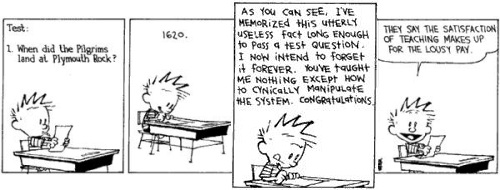
Looking forward into the future can be a scary thing. However, the outlook that I see for education is exciting and I am looking forward to being able to be a part of the changing atmosphere of education. Education used to be just about giving students information we thought they needed to know. Now that idea has changed. Teachers and school systems are focused on empowering students and promoting and developing them into the best they can be. They promote individuality, speaking up for yourself and for causes you deem worthy, and throw students into the deep end of education where they struggle, but in the end, truly learn. For the longest time, students would just memorize the info, regurgitate it on a test, and then forget it. That's not happening anymore. Students struggle until they truly understand something and then are able to recreate it without even thinking because of their struggle. Being able to see the educational world move in this direction, towards a more progressivist outlook with students in mind being their own individual selves, only continues to make me excited to become a teacher.
Looking forward into the future can be a scary thing. However, the outlook that I see for education is exciting and I am looking forward to being able to be a part of the changing atmosphere of education. Education used to be just about giving students information we thought they needed to know. Now that idea has changed. Teachers and school systems are focused on empowering students and promoting and developing them into the best they can be. They promote individuality, speaking up for yourself and for causes you deem worthy, and throw students into the deep end of education where they struggle, but in the end, truly learn. For the longest time, students would just memorize the info, regurgitate it on a test, and then forget it. That's not happening anymore. Students struggle until they truly understand something and then are able to recreate it without even thinking because of their struggle. Being able to see the educational world move in this direction, towards a more progressivist outlook with students in mind being their own individual selves, only continues to make me excited to become a teacher.
Differences with Diversity
What school and community resources might you use to help immigrant students?
 When given the question above to think about, there are a lot of different ideas that come to mind, but there are two aspects that really need to be incorporated into the education of foreign students. In order to give these students the best education possible, it is important that they understand what they are being taught, and they can't do that if there is a language barrier. Immigrant students who speak a different language as their first language need a resource to help them develop the understanding of the new language so that they can actually learn what they are being taught by the teachers if it is in a different language. This can be done in so many ways, but ESL (English as a second language) programs are in pretty much every single school in the US to help these students with the language. This way they also can have a group of other students who speak their first language that they can bond with and become friends so that they don't feel alone.
Another aspect necessary to look into for immigrant students is their culture. Some foreign cultures are very similar to that of the United States, but a lot of the times they have different customs and traditions that also need to be honored by the schools and teachers. This includes things like holidays and superstitions. If the student's cultural needs are ignored and the student is forced to assimilate they will feel alone and like they don't belong, and most likely will miss their culture. Things like clubs and activities can help students feel more like they are still attached to their culture.
Another aspect necessary to look into for immigrant students is their culture. Some foreign cultures are very similar to that of the United States, but a lot of the times they have different customs and traditions that also need to be honored by the schools and teachers. This includes things like holidays and superstitions. If the student's cultural needs are ignored and the student is forced to assimilate they will feel alone and like they don't belong, and most likely will miss their culture. Things like clubs and activities can help students feel more like they are still attached to their culture.
Friday, June 7, 2019
What it Means to be an Effective Teacher

After taking a quiz on what I have learned so far about being an effective teacher and the different theories of learning I have found that I have learned so much from studying this topic. There are so many different styles and models you can base your teaching design on, it really shows how unique teachers can be, even within the same subject. I have also found that my philosophy is about covering as much as possible, not topic wise necessarily, but making sure all of the students are reached equally and by using as many different methods as possible. I look forward to continuing learning about how to be the best teacher I can be.
Models of Teaching
Being a facilitative teacher is a fairly new idea that many older teachers may believe could be the end of the 'proper' way of schooling. However, being more of a guide rather than a dictator is incredibly beneficial for the kids. Gatto, in the article linked below, says it as it is, even if it is hard for some people to hear. Kids are being trained to listen to authority and be as similar in views as possible. This is not the way to develop smart citizens, it is the way to develop robots that will never question anything. Kids nowadays need to learn how to be independent and think critically and having a teacher that takes complete control over the classroom does not allow that. Allowing the students to have control while the teacher watches and guides them allows the students to be able to develop fully as an individual. Being able to develop a model of teaching that allows students to figure it out themselves, and not just be force-fed the information.
Against School
Against School
Wednesday, June 5, 2019
How to Approach Teaching
There are four different models of teaching:
- Social Interactive
- Information Processing
- Personal
- Behavioral
Social interactive is when students help each other with their learning. This can be through peer tutoring, cooperative learning, reciprocal teaching, or project-based learning. This model helps students develop their own understanding without the teacher getting in the way, and possibly trying to teach a concept in only one way.
Information processing promotes creative and critical thinking about different problems that are linked to class concepts. This can include concept formation, inquiry learning, or synectics.
Personal is based on the students as individuals. Each student is different and has different ways of learning concepts. Because this is such an individualized model it focuses mostly on individualized instruction and nondirective teaching.
The behavioral model uses mastery learning, direct instruction, and computer-assisted instruction. These are based on observable objectives that the teacher can track for each student.
The examples for each model are not nearly all of the different approaches to getting information across to students. There are so many different approaches and so many different ways to handle each approach. I believe it is important for teachers to not get too stuck on one model or approach. If a teacher only uses one approach (for example lectures) the students will get bored of it before the year is over. By providing students with variety in the ways that they are being taught they are more likely to be engaged the whole year as opposed to getting stuck with just one method. This also helps because of what I said earlier about how all students are different. Each student might prefer a different teaching method, and by using a variety instead of just one or two, and this way the information you are trying to get across will get into more students.
Friday, May 31, 2019
What Does the Future Hold?
5 Big Ways Education Will Change By 2020

The article attached above lists these 5 ways that education will be changing in the near future:

The article attached above lists these 5 ways that education will be changing in the near future:
- Students will interact remotely
- The success of tech will still rely on skilled teachers
- We'll think differently about the diploma
- Students will have a voice
- Educators and institutions will be forced to adapt
I believe that some of these (2 and 5) are not really changing at all. The author uses the word "still" in the second 'change' which denotes that this has already been going on, and teachers will continue to be the driving force in the changing of technology as that is where all students must start their education. Also, number 5 on this list is something that teachers have always had to do. Teaching is a very fluid profession. Each year a completely different class of students walk through your door, and they will need changes to the way you set up the curriculum so that they can get the most benefit. Educators have always needed to be able to adapt to their changing classrooms.
The other three changes I think are amazing. Students being able to interact remotely will not only allow them to have more time for learning but also can connect students across the globe which would most likely increase their compassion and understanding of other cultures. Students being able to have a voice is incredibly important. They are beginning to develop their critical thinking skills and are starting to figure out how to stand up for themselves. Giving them a voice in the community and in the school promotes this and will eventually lead to more change in society as people won't be afraid that their voices won't be heard.
Thinking differently about the diploma could be good or bad. On one hand, it will force more students to go to college to get a job that pays well, and not everyone can afford that, which will only continue to increase the poverty gap as more and more students are graduating high school. On the other hand, high schools are overall doing a better job because they have continually increasing graduation rates.
The Goals of Schools and Their Importance
After taking a poll about all of the different goals that schools have, and the importance level of each one of them it got me thinking about all of these different goals, and which I believe are best for the school. Something that I find to be important, however, is knowing that sometimes having only one goal is not enough. Schools should have a list of goals for their students, and try to promote all of them in their curriculum. Having only one goal in a school system would most likely lead to students being underdeveloped, and not having learned in enough variety to be the best they can be.
After being given a list of different goals for schools I had to figure out which ones I believe to be the most important. From all of the goals that I was given, I believe that most of them are very important for students to be getting a well-rounded education. One that is pretty much a blanket statement for all of the important goals is that students should be well prepared to go on beyond high school. This means in the 'real world' of college or work. This also means that students should be knowledgable enough to participate in many different kinds of conversations they will have while socializing. Most often this includes things like different cultures and current events that are happening. Obviously schools can't possibly teach students everything they need to know, but they should be able to teach students how to get this kind of knowledge in our new age of technology.
After being given a list of different goals for schools I had to figure out which ones I believe to be the most important. From all of the goals that I was given, I believe that most of them are very important for students to be getting a well-rounded education. One that is pretty much a blanket statement for all of the important goals is that students should be well prepared to go on beyond high school. This means in the 'real world' of college or work. This also means that students should be knowledgable enough to participate in many different kinds of conversations they will have while socializing. Most often this includes things like different cultures and current events that are happening. Obviously schools can't possibly teach students everything they need to know, but they should be able to teach students how to get this kind of knowledge in our new age of technology.
Thursday, May 30, 2019
School:The Microcosm of the Changing World
There are many philosophies that are discussed about why students must go to school, and what the goal is that they are trying to accomplish. One goal that always seems to come up is to prepare students for life outside of school. While most often this means teaching students the skills they need to join the workforce, it also means allowing students to develop socially and create their own mini versions of society within the school. As opinions and ideals shift in high schools they often start shifting in society as well. I think this is probably because as students start graduating after they had already passed their opinions onto the younger generation they went to school with, they are now focused on implementing those ideals in the 'real world'. I experienced this myself growing up in a high school during a time when a lot of change was coming about in the world. The ideals of society are often reflected in schools, which lead to a small divide in my high school during the 2016 presidential elections.
That being said, peers are not the only influence in a student's life. They also have their parents whom they look up to, and usually mimic their ideals until they can start thinking critically on their own. One of the best examples of this was my best friend who grew up in a Republican household and grew up supporting republicans, but when she got to high school and started thinking for herself flipped and became a Democrat.
That being said, peers are not the only influence in a student's life. They also have their parents whom they look up to, and usually mimic their ideals until they can start thinking critically on their own. One of the best examples of this was my best friend who grew up in a Republican household and grew up supporting republicans, but when she got to high school and started thinking for herself flipped and became a Democrat.
Tuesday, May 28, 2019
Establishing a Charter School
The Jaime Escalante Charter School Proposal
Would you support the establishment of the Escalante School? Why or why not?
I think I would probably push back a little on this school's establishment. This is because, as the board members were saying, there was not much in their plan to differentiate them from the public schools in the area.
Why can school boards be resistant to change?
Schools boards can be resistant to change because they are made up of people, and all people are resistant to change in some ways. Especially when you are part of a committee that is running something that has been doing just fine, most people don't see the need for change, and hence, try to avoid it.
Would you support the establishment of the Escalante School? Why or why not?
I think I would probably push back a little on this school's establishment. This is because, as the board members were saying, there was not much in their plan to differentiate them from the public schools in the area.
Why can school boards be resistant to change?
Schools boards can be resistant to change because they are made up of people, and all people are resistant to change in some ways. Especially when you are part of a committee that is running something that has been doing just fine, most people don't see the need for change, and hence, try to avoid it.
Money and Governance of Schooling: What do I know?
Recently I took a quiz on school governance, as well as a poll that asks what costs more in a school's budget. What I have learned is that there is so much more I need to learn about the bureaucracy of schools and how expensive everything is. I got a 57% on the quiz, answering only 4 of the 7 questions correctly, and mostly just with educated guesses. However, the poll results showed me that not many people really understand the realities of pricing of resources for schools as most of the results showed each answer was given about an equal amount of times, the highest percentage for one answer being 31%.
These questions made me think about how all of this affects a student's education without most people knowing about it. Before learning about all of the policies and differences that rules and money make in a school system I don't think I ever would have known how complicated it is, or that schools still have a lot of work to do to get to where they need to be to make educational opportunities equal for everyone across the state.
These questions made me think about how all of this affects a student's education without most people knowing about it. Before learning about all of the policies and differences that rules and money make in a school system I don't think I ever would have known how complicated it is, or that schools still have a lot of work to do to get to where they need to be to make educational opportunities equal for everyone across the state.
Schools aren't just about education

School Funding's Tragic Flaw
A lot of this funding policy also leads to a huge discrepancy in the educational world: teacher salary. Teachers are getting paid way less than they should be compared to the effort, time, and importance of our jobs. A good teacher is one of the biggest factors in educational outcome, and poor schools don't always have the money to recruit and retain the best teachers out there, just increasing the educational gap in poorer communities. Being able to raise teacher salaries is important to "draw in the best talent," as Isaac Sall says in his article about paying teachers fairly (linked below).
If We Want Better Education, We Could Start With Paying Teachers Fairly
Sunday, May 26, 2019
What Schools and Students Are Like Today
Most people somewhat agree that competition is key to improving school performance. As someone that grew up in a fairly competitive school district competition kept both students and teachers motivated. Because of this I also agree that competition is important in improving school performance.
Most people somewhat agree that schools continue to be academically weak, and stronger academic standards are needed. I believe that schools can always improve academically by changing the way that subjects are taught and ensuring that students are actively engaged in their lessons instead of just trying to mindlessly absorb information.
Most people disagree that schools do a great job preparing students for vocational careers. This is mostly because most schools focus on making sure students are prepared to go directly into college, instead of into any kind of career. School's definitely need to work on this aspect because not everyone can go to college, and not everyone should.
People agree that schools emphasize test scores at the expense of other kinds of evaluation. Many schools over-focus on testing because how students score on the standardized tests is how the school is 'graded' and most schools want to be labeled as the best, or try to do better each year. This gets pushed onto students and the actual learning is diminished.
People disagree that schools do an admirable job of moving children out of poverty into middle-class life. Most students that grow up poor end up in poorer school districts. This is a problem because these schools don't have access to the resources they need to help educate these students enough, which ends up creating a poverty cycle that families get looped into.
People have mixed views on whether homeschooling is an effective alternative to the typical public school. I don't agree that homeschooling is an effective alternative because homeschool does not provide the socialization that public school does. Students in public school make friends that they keep for life, and also learn how to handle dealing with others, and what to do when things don't go their way.
People have mixed views on whether students care about the less fortunate, both here and overseas. This changes depending on the school district. Some school districts teach about what's going on with the less fortunate here and in different countries, while other schools shy away from the subject. The students that are being taught about it are probably more likely to care about those less fortunate than them.
People somewhat agree that competition is key to improving student performance. I absolutely agree that competition helps student performance, being a very competitive student myself. Games where students can win extra points always got the heart racing and opened the mind to try and see what students already know, and then the people who lose know that they need to study more. Competition fuels motivation.
People have mixed views on whether schools are stronger academically today then they have ever been before, and without knowing statistics it is hard to say. However, due to all of the crazy advancements in technology, it sure seems as though today's kids are drastically outdoing what the students of the past could do.
Most people somewhat agree that schools continue to be academically weak, and stronger academic standards are needed. I believe that schools can always improve academically by changing the way that subjects are taught and ensuring that students are actively engaged in their lessons instead of just trying to mindlessly absorb information.
Most people disagree that schools do a great job preparing students for vocational careers. This is mostly because most schools focus on making sure students are prepared to go directly into college, instead of into any kind of career. School's definitely need to work on this aspect because not everyone can go to college, and not everyone should.
People agree that schools emphasize test scores at the expense of other kinds of evaluation. Many schools over-focus on testing because how students score on the standardized tests is how the school is 'graded' and most schools want to be labeled as the best, or try to do better each year. This gets pushed onto students and the actual learning is diminished.
People disagree that schools do an admirable job of moving children out of poverty into middle-class life. Most students that grow up poor end up in poorer school districts. This is a problem because these schools don't have access to the resources they need to help educate these students enough, which ends up creating a poverty cycle that families get looped into.
People have mixed views on whether homeschooling is an effective alternative to the typical public school. I don't agree that homeschooling is an effective alternative because homeschool does not provide the socialization that public school does. Students in public school make friends that they keep for life, and also learn how to handle dealing with others, and what to do when things don't go their way.
People have mixed views on whether students care about the less fortunate, both here and overseas. This changes depending on the school district. Some school districts teach about what's going on with the less fortunate here and in different countries, while other schools shy away from the subject. The students that are being taught about it are probably more likely to care about those less fortunate than them.
People somewhat agree that competition is key to improving student performance. I absolutely agree that competition helps student performance, being a very competitive student myself. Games where students can win extra points always got the heart racing and opened the mind to try and see what students already know, and then the people who lose know that they need to study more. Competition fuels motivation.
People have mixed views on whether schools are stronger academically today then they have ever been before, and without knowing statistics it is hard to say. However, due to all of the crazy advancements in technology, it sure seems as though today's kids are drastically outdoing what the students of the past could do.
Saturday, May 25, 2019
Essentialism in Action
Essentialism in Classrooms

Bringing games into the classroom is one of the best ways to get kids excited and engaged in the lessons. It is also a good way to assess how much they know, and get them to start thinking about how much they have to study before their upcoming tests. Jeopardy is a classic study tool that a lot of teachers use, and it has always been one of my favorite things to do, in and out of the classroom. I was always and incredibly competitive kid, and teachers having us play jeopardy actually taught me how to be a good sport and accept defeat graciously. There are a lot of kids out there just like me who hate losing and love the thrill of competition. This can be an advantage and a disadvantage of incorporating fun games into the classroom. Sore losers can ruin games like this in a classroom by causing a scene or being overall ungrateful and negative just because they lost. Also, sometimes the heat of competition can get into the students' heads and they can say mean things to other students. However, with the right group of students, and a good explanation about how if they do or say anything negative they won't be able to play the fun game again, this teaching technique is an awesome way to lighten up the classroom and the smiles on students' faces!
The topics that the teacher used in her jeopardy for the students are perfect for an essentialist classroom. They allowed for easy memorization of the essential facts to know when learning about geography, and when she covered things the students didn't have to know, she made sure they were facts that would be covered in the next unit. Essentialism can be dangerous, however. It doesn't allow students to go past what is required and focuses on facts instead of expanding the intellect and becoming a critical thinker. This is why this philosophy is perfect for younger grades when students don't have a sense of critical thinking yet.
In order to make this a constructivist lesson instead of an essentialist one, the teacher could still use the same questions, as long as she made them focus less on facts, and made the students think more. Instead of asking what continent a country is in, or how to get to a specific location, the teacher could ask the students questions about the kind of method of travel one might use to get to and from specific places, or the kind of climate or environment an area might have based on its location.
Bringing games into the classroom is one of the best ways to get kids excited and engaged in the lessons. It is also a good way to assess how much they know, and get them to start thinking about how much they have to study before their upcoming tests. Jeopardy is a classic study tool that a lot of teachers use, and it has always been one of my favorite things to do, in and out of the classroom. I was always and incredibly competitive kid, and teachers having us play jeopardy actually taught me how to be a good sport and accept defeat graciously. There are a lot of kids out there just like me who hate losing and love the thrill of competition. This can be an advantage and a disadvantage of incorporating fun games into the classroom. Sore losers can ruin games like this in a classroom by causing a scene or being overall ungrateful and negative just because they lost. Also, sometimes the heat of competition can get into the students' heads and they can say mean things to other students. However, with the right group of students, and a good explanation about how if they do or say anything negative they won't be able to play the fun game again, this teaching technique is an awesome way to lighten up the classroom and the smiles on students' faces!
The topics that the teacher used in her jeopardy for the students are perfect for an essentialist classroom. They allowed for easy memorization of the essential facts to know when learning about geography, and when she covered things the students didn't have to know, she made sure they were facts that would be covered in the next unit. Essentialism can be dangerous, however. It doesn't allow students to go past what is required and focuses on facts instead of expanding the intellect and becoming a critical thinker. This is why this philosophy is perfect for younger grades when students don't have a sense of critical thinking yet.
In order to make this a constructivist lesson instead of an essentialist one, the teacher could still use the same questions, as long as she made them focus less on facts, and made the students think more. Instead of asking what continent a country is in, or how to get to a specific location, the teacher could ask the students questions about the kind of method of travel one might use to get to and from specific places, or the kind of climate or environment an area might have based on its location.
Friday, May 24, 2019
When I Become a Teacher...
Educational Philosophies Self-Assessment
It is incredibly important to develop your own teaching philosophy. This is because your philosophy is what rules over what you do and teach and how you teach it. If you are using someone else's philosophy or you don't have one, being a teacher will feel like wearing shoes that are too big; it will be awkward and difficult to navigate. With your own philosophy, you will be comfortable where you stand and know where to go when you have questions about what you should be doing.
After taking a self-assessment of what my educational philosophy is (link above) I found out that my philosophy does not just fall under one category. Reconstructivism, cognitivism, and progressivism were all of the results I got when I took this test, and I am not surprised at all. Having multiple types of philosophies about how you teach a classroom to provide a well-rounded education for your students and its a belief that I have always held.
Reconstructivism is focused on teaching students to be productive members of society so that democracy and society are made better and "reconstructed" and transformed as the generations go through.
Cognitivism is based on the idea that students develop their own knowledge by taking in the world around them and building onto what they already know. If the student doesn't understand something that is going on in their environment they will ask questions about it due to their natural curiosity so they can understand and learn.
Progressivism is dedicated to focusing education on the children as individuals. The main idea of this philosophy is that the student is the focus and school should be dedicated to the students as individuals and their curriculum should be shaped to fit their needs.
Now, all of these philosophies when used as the only philosophy a teacher is focused on may seem a little extreme, but when several are used throughout the school year they can balance each other out. Each teacher should find their own perfect balance of these philosophies and engage in all of them together, and not let one overtake the other.
It is incredibly important to develop your own teaching philosophy. This is because your philosophy is what rules over what you do and teach and how you teach it. If you are using someone else's philosophy or you don't have one, being a teacher will feel like wearing shoes that are too big; it will be awkward and difficult to navigate. With your own philosophy, you will be comfortable where you stand and know where to go when you have questions about what you should be doing.
After taking a self-assessment of what my educational philosophy is (link above) I found out that my philosophy does not just fall under one category. Reconstructivism, cognitivism, and progressivism were all of the results I got when I took this test, and I am not surprised at all. Having multiple types of philosophies about how you teach a classroom to provide a well-rounded education for your students and its a belief that I have always held.
Reconstructivism is focused on teaching students to be productive members of society so that democracy and society are made better and "reconstructed" and transformed as the generations go through.
Cognitivism is based on the idea that students develop their own knowledge by taking in the world around them and building onto what they already know. If the student doesn't understand something that is going on in their environment they will ask questions about it due to their natural curiosity so they can understand and learn.
Progressivism is dedicated to focusing education on the children as individuals. The main idea of this philosophy is that the student is the focus and school should be dedicated to the students as individuals and their curriculum should be shaped to fit their needs.
Now, all of these philosophies when used as the only philosophy a teacher is focused on may seem a little extreme, but when several are used throughout the school year they can balance each other out. Each teacher should find their own perfect balance of these philosophies and engage in all of them together, and not let one overtake the other.
Development Into Inclusiveness: The History of American Education

How did the story of American education begin? It is definitely not what we picture when we think of modern-day schools, however, there are more similarities than one would think. I was shocked, as I'm sure most people would be when I found out that American public education started with a design based on the model that Prussia (modern-day Germany) had implemented to teach obedience and discipline to their nation's children. This system was set up to make little soldiers out of students, not educate them.
We've come a long way since then, shifting towards and education that promotes free thought and critical thinking. One thing that has changed, if only so it's not so obvious anyone, is the factor of race and economic status. For the longest time, schools that were deemed "public" only let white students into their classrooms, and even before the invention of free public schooling, only the rich could afford to send their kids to school. This did nothing but widen the educational gap between the rich and the poor. However, once African American children were allowed into schools they were kept separated from the white students and forced to go to 'colored' schools. There were not as many 'colored' schools as there were white schools, which often meant students of color had to walk incredible distances just to receive their education. While modern America prides itself in its desegregation of school districts, the truth is that they really are still segregated. Growing up in a neighborhood that was filled with rich people, and having friends from poorer neighborhoods I got to experience this firsthand. One of the most noticeable differences between rich and poor neighborhoods is the race that takes up the majority of the school. My school, in the fairly rich neighborhood, was filled with white people, and had a fairly large Asian population as well. The town just next to ours, which was much poorer had a majority Hispanic and black population. My school had many more resources, and students not only had better access to a higher quality education, they also had cleaner and nicer school buildings. The link below is to an article that goes more into detail about how even having a culture and language that are different from the norm decrease the quality of your education as well.
Even with the problems that are still around, the American school systems have come a long way, and have started figuring out how to truly get every student access to quality education. The school system will never be perfect, but it is much better than it has ever been, and I truly believe it is going to continue the positive trend. 💕
Social Organization of Classes and Schools
Habits Taken on By an Effective Teacher
11 Habits of an Effective Teacher
1. Enjoys Teaching
2. Makes a Difference
3. Spreads Positivity
4. Gets Personal
5. Gives 100%
6. Stays Organized
7. Is Open-Minded
8. Has Standards
9. Finds Inspiration
10. Embraces Change
11. Creates Reflection
While some of these aren't really habits, the other suggestions Carrie Lam gives in this article make a lot of sense. It is a teacher's job to put the student first and make sure that they are getting the best education they can in their classroom. Being able to be fluid, kind, supportive, open-minded, and organized helps a teacher be the best they can be for a student.
The article above lists the 11 habits of an effective teacher to be:
1. Enjoys Teaching
2. Makes a Difference
3. Spreads Positivity
4. Gets Personal
5. Gives 100%
6. Stays Organized
7. Is Open-Minded
8. Has Standards
9. Finds Inspiration
10. Embraces Change
11. Creates Reflection
While some of these aren't really habits, the other suggestions Carrie Lam gives in this article make a lot of sense. It is a teacher's job to put the student first and make sure that they are getting the best education they can in their classroom. Being able to be fluid, kind, supportive, open-minded, and organized helps a teacher be the best they can be for a student.
Wednesday, May 22, 2019
Becoming a Teacher
Strengths:
- Teachers are making a difference in the lives of so many different students, whether it be by helping them through one of the hardest parts of their lives, inspiring them to pursue a certain career or continue their path of learning, or help them get past the understanding of topics they have always struggled with. Teachers are there to help influence students to become the best they can be.
- The joy of working with children, and the creativity it requires to help get lessons across in a fun and unique way to help engage them in lessons and seeing their joy in learning and the fun they have with the creative lessons is definitely a strength when it comes to teaching.
- The intellectual and creative stimulation that comes along with planning good lessons and giving them to students, while also having them add to the discussion in the classroom and promote intellectual growth not just among the other students but also for the teacher.
- The appreciation that comes from the students, even if it is just a small number that show it, is most of what makes teaching such a fulfilling job.
Weaknesses:
- The salary is probably one of the worst weaknesses. Teachers are radically underpaid for the amount and the importance of the work that they do.
- The workload and the amount of time teachers spend outside of the classroom working on their job takes up most of the space in a teacher's life.
- Teachers don't get the amount of respect that they deserve in the adult world. People believe that teaching is easy and anyone can do it, even though it is most definitely not true. Sometimes this can even come from the students as well.
- Administration and bureaucracy constantly keep teachers in check and limit their creativity which can start wearing teachers down and take the joy and fun out of teaching.
While becoming a teacher has a lot of both strengths and weaknesses, it really takes a special kind of person to get past all of the negatives that are out there. Teachers are the kind of people who are working because they care, not because of money, and certainly not for status. Teachers do what they do because they know they are making a difference in the world and that's all that they need to motivate them. Being a teacher can be hard, with all of the people saying we are useless and administration making our jobs so much harder, but a good teacher does not stop and keeps pushing to make sure that they can educate their students as best as they can.
Questions for further discussion:
- Do you think there will be any change in the near future about the public perception of the importance of teachers?
- What are things that teachers can do to bring joy back into their work when it gets hard?
- What should teachers do to make sure they are always growing and becoming better in their work?
Reflection on What it Means to be a Teacher
Video
What do you enjoy most about teaching?
What made you choose the grade you teach?
What is the biggest challenge you face?
What has surprised you?
What advice would you give future teachers?
This video shares the perspectives of several different teachers that were asked the questions above. They provide insight into what it means to be a teacher and all of the best and worst parts of teaching. In the end, the overall message is that teaching is not for everyone, but the people who it is for love it, despite all of the difficulties they face. As far as sharing their views or not, because I have not actually been in front of a classroom yet, I can't exactly say. However, from what I know so far about being a teacher I do share a lot of their beliefs and values. That moment when a student recognizes that they understand something new is the reason I wanted to get into teaching, which a couple of these teachers mentioned in the video. Throughout high school and college tutoring friends and other students, I saw that moment a lot and fell in love with the idea that I could keep getting students to feel that way. I have always known that I wanted to teach high schoolers because of the same reason the high school teacher stated in the video. High schoolers have a higher level of understanding so you can push them a little harder, and it is easier to joke around with them and get the students engaged in the lessons. As far as the biggest challenge goes, due to lack of experience, I would not be able to say, but from what I have taken from listening to other teachers not having enough time is the hardest part of being a high school teacher. The same thing goes for what has surprised me, lack of experience means I don't have much to say about surprises, but from observing what has surprised me most is all of the different approaches teachers take to present the same subject. My advice would be the same as one of the teachers in the video, however. If you find that this job is not fun for you, and is just causing stress it is important, not just for you but also for the students, that you figure out why, and possibly think about pursuing a different career.
What do you enjoy most about teaching?
What made you choose the grade you teach?
What is the biggest challenge you face?
What has surprised you?
What advice would you give future teachers?
This video shares the perspectives of several different teachers that were asked the questions above. They provide insight into what it means to be a teacher and all of the best and worst parts of teaching. In the end, the overall message is that teaching is not for everyone, but the people who it is for love it, despite all of the difficulties they face. As far as sharing their views or not, because I have not actually been in front of a classroom yet, I can't exactly say. However, from what I know so far about being a teacher I do share a lot of their beliefs and values. That moment when a student recognizes that they understand something new is the reason I wanted to get into teaching, which a couple of these teachers mentioned in the video. Throughout high school and college tutoring friends and other students, I saw that moment a lot and fell in love with the idea that I could keep getting students to feel that way. I have always known that I wanted to teach high schoolers because of the same reason the high school teacher stated in the video. High schoolers have a higher level of understanding so you can push them a little harder, and it is easier to joke around with them and get the students engaged in the lessons. As far as the biggest challenge goes, due to lack of experience, I would not be able to say, but from what I have taken from listening to other teachers not having enough time is the hardest part of being a high school teacher. The same thing goes for what has surprised me, lack of experience means I don't have much to say about surprises, but from observing what has surprised me most is all of the different approaches teachers take to present the same subject. My advice would be the same as one of the teachers in the video, however. If you find that this job is not fun for you, and is just causing stress it is important, not just for you but also for the students, that you figure out why, and possibly think about pursuing a different career.
Subscribe to:
Comments (Atom)